01
How Much Does EV Charger Installation Cost in Lawton?
Level 2 chargerpanel upgradelabor cost
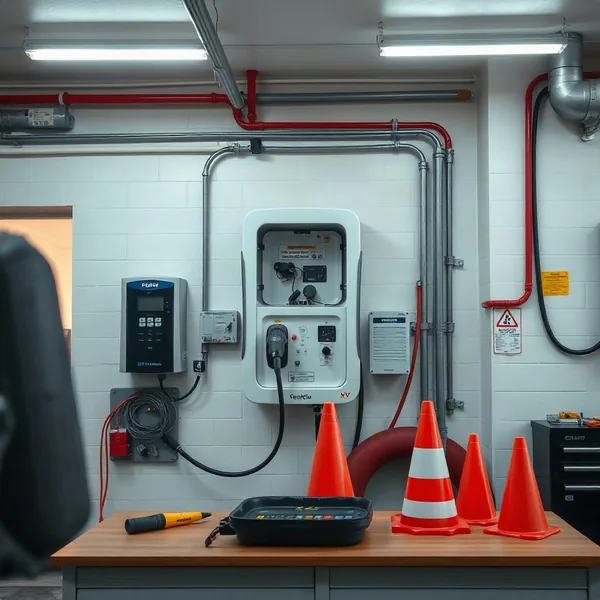
EV charger installation cost in Lawton runs $400 to $900 for a standard Level 2 charger when your panel already has an open 240V breaker slot.
Tesla home charger cost — specifically Tesla Wall Connector installation cost — lands in the same range, typically $500 to $1,000 depending on wire run distance. Labor cost averages $75 to $120 per hour, and most jobs take three to five hours. If your home needs a panel upgrade to support a new 60-amp circuit, budget an additional $1,000 to $3,000. Electric car charger installation cost rises further when the charger mounts in a detached garage, since longer conduit runs add materials and time. Always get a site-specific quote before committing.
02
What's Included in Home EV Charger Installation
dedicated circuitNEMA 14-50wiring diagram
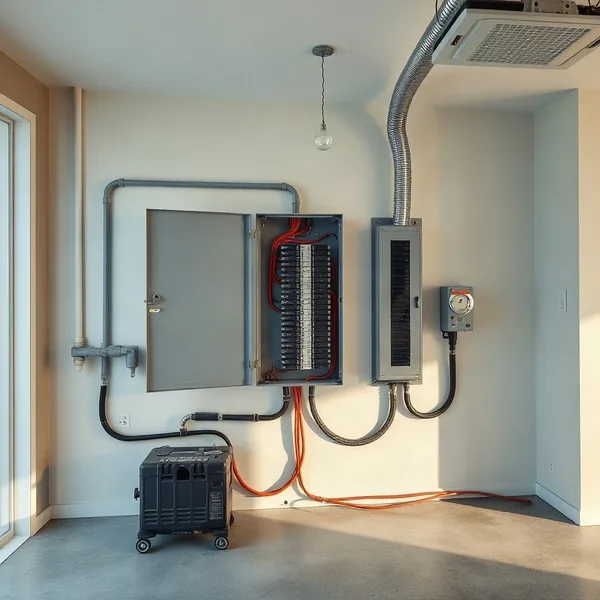
A complete EV charger installation covers every step from the electrical panel to the wall-mounted unit.
Your electrician pulls a dedicated circuit — usually a 50- or 60-amp breaker — runs conduit and wiring to the garage or mounting location, and installs a NEMA 14-50 outlet or hard-wires the charger directly, depending on the brand. A wiring diagram is prepared before any work starts to satisfy permit requirements. The price includes mounting the EV wall charger, connecting it to the dedicated circuit, and verifying proper grounding. Most ev charger electrician visits also include a brief orientation so you understand load timing and overnight scheduling — a detail that adds years to your battery's life.
03
Tesla Wall Connector & Level 2 Charger Installation
Tesla Wall Connector220V outletcharging cable
Tesla charger installation follows the same basic process as any Level 2 install but has a few model-specific details worth knowing.
The Tesla Wall Connector mounts on a standard wall stud, connects to a 240V circuit, and typically uses a 60-amp breaker with 6 AWG copper wiring. Unlike a simple 220V outlet and charging cable setup, the Wall Connector communicates directly with the car to optimize charge rate. Installing a tesla home charging station yourself voids Tesla's equipment warranty, so a licensed electrician is non-negotiable. Most Tesla Wall Connector installations in Lawton take three to four hours when the panel is close to the garage, and the charger adds roughly 44 miles of range per hour of charge.
04
Home Charging Point Setup for Any EV
ChargePointJuiceBoxgarage wiring
Electric car home charging station options go well beyond Tesla.
ChargePoint and JuiceBox are two of the most popular brands among Lawton homeowners — both offer Wi-Fi scheduling, energy tracking, and compatibility with every major EV on the market. EV charging station installers assess your garage wiring first, since older homes in the 73501 and 73505 ZIP codes sometimes have undersized sub-panels in detached garages. ChargePoint Home Flex operates at up to 50 amps and can be adjusted as your panel allows; JuiceBox 40 is a strong mid-range option at 40 amps. Either way, your electrician sizes the circuit to the charger's maximum draw, leaving room for future capacity without a second upgrade.
05
Do I Need a Permit for an EV Charger Install?
electrical permitinspectionNEC 625
Yes — an electrical permit is required for every EV charger install in Lawton, Oklahoma, no exceptions.
The installation adds a new 240V branch circuit, which triggers both local building code and NEC 625, the National Electrical Code article that governs electric vehicle supply equipment. The permit process involves submitting a wiring diagram, paying a fee ($50 to $150 in Lawton), and scheduling a city inspection after the work is complete. Licensed electricians in our network handle the permit application on your behalf. Skipping this step can void your homeowner's insurance for any electrical incident and create title problems when you sell. The inspection itself usually takes less than 30 minutes once the electrician has completed the rough and finish work correctly.
06
Which EV Charger Is Right for Your Home?
amperagecharging speedbrand comparison
Choosing the right charger comes down to three variables: amperage, charging speed, and how often you drive more than 150 miles in a day.
A 32-amp Level 2 charger adds about 25 miles per hour of charge — enough to top off overnight for most commuters. Stepping up to a 48-amp unit cuts full-charge time by roughly a third. Level 3 DC fast chargers are faster but require three-phase commercial power and cost $20,000 or more to install — entirely impractical for residential use. In a brand comparison, ChargePoint Home Flex wins on adjustability, JuiceBox edges ahead on app features, and the Tesla Wall Connector is the only option that unlocks Tesla's full charge-rate communication protocol. Match amperage to your panel's available capacity first.
07
EV Charger Installation Near You in Lawton
Lawton service arealicensed electricianresponse time
Our Lawton service area covers ZIP codes 73501, 73505, and 73507, plus nearby communities including Cache, Elgin, Fletcher, and Fort Sill — generally within a 40-mile radius.
When you search for ev charger installation near me or an ev charger electrician near me, we connect you with a licensed electrician who already works in your neighborhood. Response time from first contact to scheduled site visit is typically one to two business days, and most standard Level 2 installations are bookable within a week. Tesla charger installation near me requests follow the same scheduling window. Every electrician we refer carries Oklahoma licensure and general liability insurance, so your residential electrical system stays protected throughout the job.
08
How Do EV Chargers Actually Work?
charging levelsonboard chargerkWh
EV chargers supply AC power to your car's onboard charger, which converts it to DC and stores it in the battery pack.
Charging levels describe power delivery: Level 1 uses a standard 120V household outlet at about 1.4 kWh per hour — enough for five to seven miles of range — while a Level 2 charger runs on 240V and delivers 7 to 19 kWh per hour depending on amperage. That difference translates to a full charge overnight versus three or four days on a trickle. The onboard charger inside your vehicle caps the maximum AC input, so a 48-amp wall unit won't help if your car accepts only 32 amps. Understanding this relationship helps your electrician size the circuit correctly the first time.