01
Why Does Electrical Grounding Matter for My Home?
ground rodgrounding electrodecode requirement
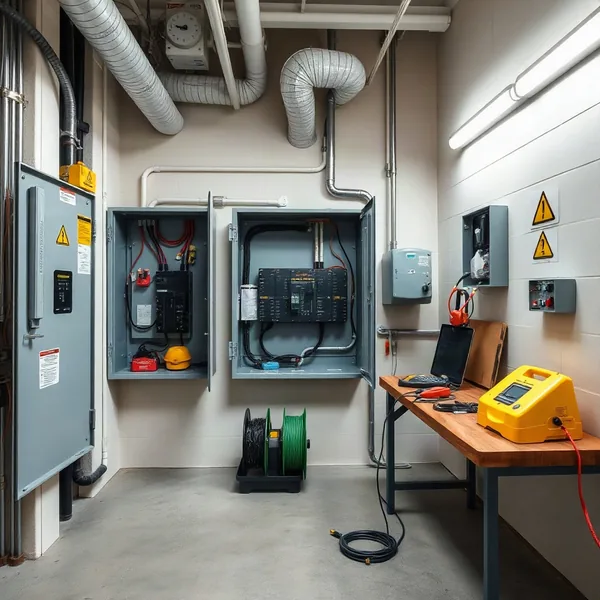
Electrical grounding gives fault current a safe path into the earth instead of through you or your appliances.
Every home in Lawton served by our network must meet NEC Article 250, which requires a grounding electrode — typically a copper-clad ground rod driven at least 8 feet into the soil — connected to the main panel. Without that path, a single wiring fault can send enough current through a metal faucet or appliance chassis to cause cardiac arrest. Homes without proper grounding also fail inspection and can trigger insurance claim denials. The code requirement exists because ungrounded systems are simply dangerous, not just inconvenient.
02
How Do I Know if My House Is Properly Grounded?
outlet testerbonding jumper
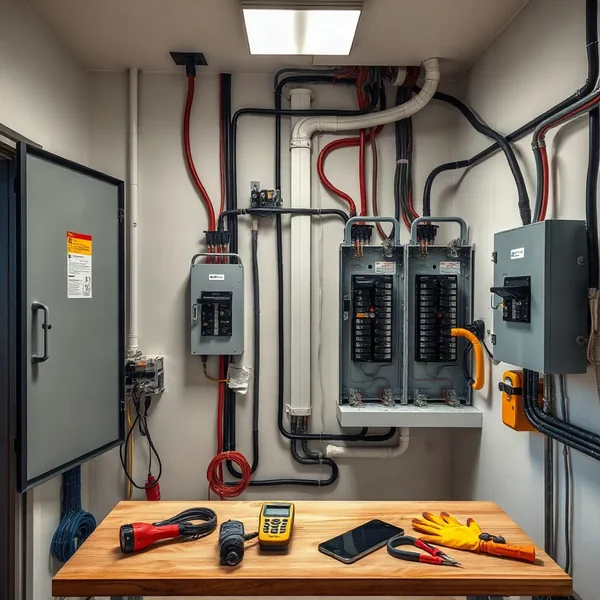
A $15 plug-in outlet tester can give you a first answer in about 30 seconds — insert it into any three-prong outlet and check the indicator lights against the legend on the device.
If the tester shows an open ground, that circuit needs attention. Older Lawton homes, especially those built before 1965, often have two-prong outlets throughout the house, which means there's no ground at all. A licensed electrician can also check whether the bonding jumper at your panel is intact, since a missing or corroded jumper can leave your grounding system incomplete even when a ground rod is physically present. Professional testing typically takes 45–90 minutes.
03
Can You Repair a Damaged Ground Wire?
ground wireground clamp
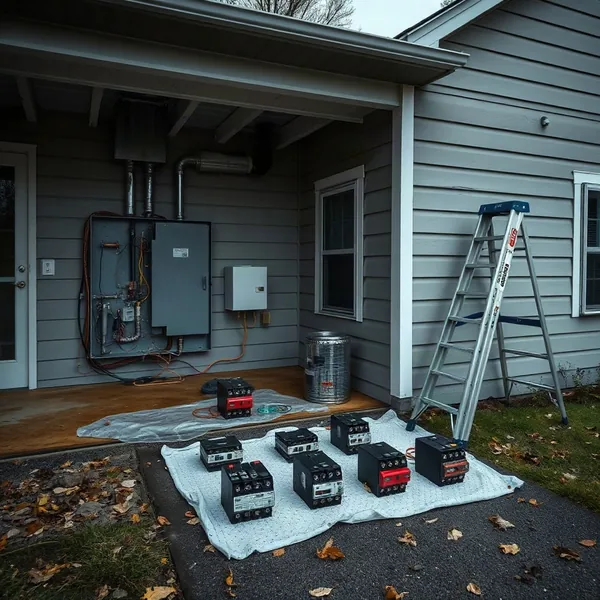
Ground wire repair is one of the more straightforward fixes in residential electrical work, and yes, a licensed electrician can handle it in a single visit.
The repair involves tracing the damaged ground wire back to its connection point — usually a ground clamp at the panel or at the electrode — cutting out the corroded or broken section, and splicing in new copper wire rated for the circuit. A ground clamp must be rated for direct burial if the connection is at the rod itself. Depending on where the break is and how accessible the wiring is, a single ground wire repair in a Lawton home typically takes one to three hours from diagnosis to final test.
04
How Much Does Grounding Repair Cost in Lawton?
ground rod costpanel bonding cost
Grounding repair costs in Lawton range from about $100 to $400 for most single-circuit fixes.
Installing a new ground rod — including materials, driving, and connection — generally runs $150 to $300, and that ground rod cost covers the electrode, clamp, and ground wire back to the panel. Panel bonding cost, which covers inspection and replacement of the main bonding jumper inside the panel, typically adds $75 to $150. Full-home rewiring to add grounds to every circuit is a larger project, usually $1,500 to $4,000 depending on home size and the number of circuits involved. We always recommend getting a written quote before any work begins.
05
What Are the Risks of Ungrounded Outlets?
GFCIshock hazard
Ungrounded outlets are a genuine shock hazard — without a ground path, fault current from a malfunctioning appliance travels through whatever is nearest, which could be a person.
Electronics are also vulnerable: surge protectors don't function properly without a ground, so a single power spike can destroy a computer or television. Installing a GFCI outlet is the NEC-approved workaround when running a new ground wire isn't feasible — a GFCI detects imbalanced current and trips within 1/40th of a second, dramatically reducing the shock hazard. GFCI outlets must still be labeled 'No Equipment Ground' when used this way. Two-prong outlets in Lawton homes built before 1970 should be evaluated before anything is plugged into them long-term.